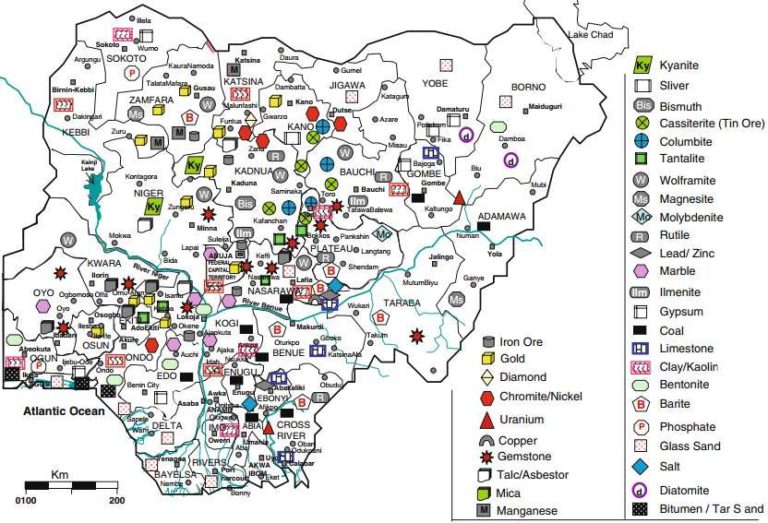

The Association of Solid Minerals Miners and Marketers of Nigeria (ASMMMON) occupies a high-value strategic space at the intersection of local mining practice and national mineral policy. In practice, ASMMMON’s mandate must extend beyond membership administration and event programming to include three operational pillars: (1) formal representation and policy advocacy; (2) market access and value-chain development; and (3) capacity building for artisanal and small-scale miners (ASM). Nigeria’s mineral endowment is diverse — from limestone and barite to tin, columbite and increasingly lithium and gold — yet the sector’s macroeconomic contribution remains small relative to potential. Recent government reporting shows the solid minerals sector contributed N1.39 trillion to GDP in 2024, demonstrating measurable growth but also highlighting an enormous opportunity gap. Punch Newspapers
Why that gap matters to ASMMMON: policy and market incentives profoundly shape whether mineral wealth is converted into domestic jobs, domestic processing, and local government revenue. For years the sector has been characterized by under-reporting, fragmented small-scale operations, and weak downstream processing. The Federal Government has signalled policy shifts — for example, conditionalities around granting mining licences that prioritise companies committing to local processing — which will materially affect how miners and marketers organise and invest. ASMMMON must therefore operate as a coordination platform that helps members meet those new conditionalities and capture value locally. Reuters
Operational priorities I recommend ASMMMON adopt immediately:
-
Build a regulatory intelligence unit that tracks licensing rules, export restrictions, and fiscal incentives (e.g., tax waivers for equipment importation), and converts them into member checklists.
-
Create a collective compliance programme for environmental, health & safety (EHS) and traceability — a prerequisite for market access in many international supply chains.
-
Negotiate market access and off-take agreements as a block (aggregated volumes command better pricing and attract processors).
-
Form strategic technical partnerships with tertiary institutions and accredited labs to provide low-cost assaying, certification, and product grading services to members.
ASMMMON’s credibility will depend on measurable outcomes: greater share of processed product in national export baskets, improved revenue remittances from the sector to the federation, and visible formalisation of ASM. Recent Ministry of Solid Minerals Development performance reports and government audits provide baseline data ASMMMON should use for tracking progress (production summaries, commodity breakdowns, revenue collections). The Ministry’s 2023–2024 sector performance document, for example, shows the production composition by weight (with limestone dominant by volume), which informs where market aggregation and beneficiation programs should prioritise investment. msmd.gov.ng
Conclusion: ASMMMON’s strategic value is realized when it moves beyond advocacy rhetoric into operating services that materially reduce transaction costs for members and help them comply with evolving policy—thus unlocking the value latent in Nigeria’s vast but under-utilized solid minerals base.